 Katrina Griffiths
Senior editor
Katrina Griffiths
Senior editor
Published on: October 1, 2026
How to spot a clone or copycat casino site
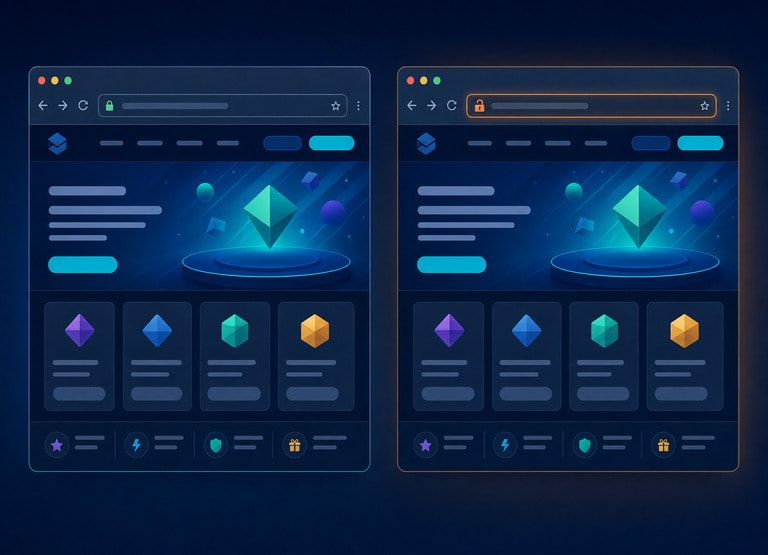
A clone casino takes the name, logo and colours of a real, registered operator and puts them on an address that operator doesn’t own. That’s a different problem from an offshore casino, which is at least what it claims to be. A clone is built to look like a site you’ve already decided to trust.
You’ve probably come across one before. While reviewing operator details, you found a site using a registered Canadian brand’s name on a different domain extension. It claimed regulatory approval but published no registration number or company name, offered a crypto cashier, and its sign-up and login buttons led nowhere. What you risk at an unregistered site in general is covered in playing at unlicensed online casinos. Clones are a narrower problem and easier to spot once you know where to look.
Three kinds of copycat
- Lookalike websites: a real brand name with an extra word, a hyphen, a misspelling or a different ending, such as .online or .top in place of the operator’s own address.
- Counterfeit apps: app store listings that use a real brand’s name and icon but are published by someone else.
- Fake ads and social accounts: sponsored posts and profiles that impersonate a casino, often followed by a private “you won” message to people who commented on a real contest.
All of these can occur in Alberta. AGLC has warned players about a rise in fraudulent apps and social media ads impersonating the province’s casinos and racing entertainment centres, including counterfeit versions of the Play Alberta app in both the Apple and Google Play stores.
Why Alberta players are a target right now
Alberta’s market opened to private operators on July 13, 2026, and AiGC’s directory listed 33 registered sites at the time of publishing. Most of those brands are new to Alberta players, even where the names are familiar from TV advertising or from Ontario. If you’ve never visited a brand’s Alberta site, you don’t know what the real one looks like, and that’s the gap a clone relies on.
The addresses add to the confusion. Several registered operators run their Alberta site on its own address, often with “ab” in it, separate from the site they run in other provinces or countries. The address you remember from elsewhere may not be the one registered here, and a copycat doesn’t need to look much different from either.
The tells
Like other items that can be counterfeited, determining whether a site is fake isn’t as easy as spotting one sign. Thankfully, clones tend to slip up in the same places, and with a bit of examination, it’s often easy to see them for what they are.
The address
Read the address bar letter by letter rather than trusting the logo. If you’re not sure what the name should be, Google the name of the casino and compare the top results with the site address of the page you’re on. Look for words like “canada” or “casino” added to the brand, hyphens the real site doesn’t use, swapped or doubled letters, and endings the operator doesn’t use.
Hover over the sign-up button before clicking it: if it points to a different domain, you aren’t where you thought you were. AGLC also notes that fakes often link out to genuine websites to borrow credibility, so a working link to a real page proves nothing.
The footer
Another place to examine is the footer. Scroll to the very bottom of the page. A registered Alberta site must show its regulatory details, usually in the footer, and display the GameSense helpline on its registration page. Expect to find:
- The operator’s legal company name, which is often different from the brand.
- A statement that it’s licensed and regulated by AGLC, with a registration number.
- 18+ as the minimum age.
- The GameSense number and a link to responsible gambling support.
A clone usually gets at least one of these wrong. A vague “fully licensed and regulated” with no regulator or number, a 19+ age limit (that’s Ontario’s, not Alberta’s), or a helpline from another province all suggest the page was built for somewhere else, or for nowhere.
The cashier
No registered Alberta site accepts cryptocurrency. AGLC’s standard says it isn’t legal tender and must not be accepted, so a Bitcoin or USDT option in the cashier rules a site out on its own. Be just as wary of a site that wants card details before you’ve created an account, or that steers you toward a wire transfer or gift cards.
The logos and badges
Registered operators display the AiGC logo on their sites and apps, and AiGC tells players to look for it, but don’t stop there. AGLC’s own fraud guidance warns that fraudsters duplicate legitimate logos, and a badge is an image anyone can copy.
The details that don’t add up
Copy that claims a 4.8 out of 5 rating from more than 50,000 reviews and return rates of 96% to 98% should match on the real operator’s site. Spelling mistakes, buttons that don’t respond and contact addresses on free email services such as Gmail or Hotmail are other tells AGLC lists.
The one check a clone can’t fake
A clone can copy a logo, a footer and a whole page design, but it can’t add itself to the regulator’s list. AiGC keeps a directory of every registered site, and each entry links to that operator’s actual address. If you reach a casino through the directory, you’re on the real site.
- Open AiGC’s directory and find the brand.
- Follow its Visit link and compare that address with the one you were about to use.
- Bookmark the real address and use the bookmark from then on, not ads or search results.
- For an app, check the developer’s name in the store listing against the legal company name in the site’s footer, and use the download link on the operator’s own site where there is one.
A few directory entries don’t carry a working link yet. For those, match the company name in the site’s footer against AGLC’s register, a process set out in how to verify an online casino is licensed in Alberta.
If you’ve already used a clone
Act quickly, in this order:
- Stop depositing, and don’t send anything more to “verify” or “unlock” a withdrawal.
- Call your bank or card issuer and report the payment.
- Change the password on your email and on any account where you reused the one you gave the clone.
- If you uploaded ID, contact Equifax and TransUnion about placing a fraud alert on your credit file.
- Report it to the Canadian Anti-Fraud Centre and tell the real operator and AiGC so they can act on the copy.
Unfortunately, the regulated complaint routes won’t recover money from a clone. They cover registered operators only, and a clone isn’t one, so your bank is usually your best chance of getting a deposit back.
Before your next deposit
The habit that protects you is reaching every casino through the directory or your own bookmark, never through a link someone sent you. Use the registered sites listed on the safe casinos page, and read why a real site asks for your ID, and when that request is a warning sign, on why licensed casinos ask for your ID.
You must be 18 or older to gamble online in Alberta. If gambling is causing problems for you or someone you know, the Alberta Health Services Addiction Helpline is open 24/7 on 1-866-332-2322, and GameSense has free tools and advisors.